


The Summer Research Experience for Undergraduates is a National Science Foundation-funded program through the “Future Sensors” project (NSF Grant 2217824). The goal of the program is to provide an eight-week long multi-disciplinary research training to undergraduates toward the development of sensors to detect environmental and a greater understanding of the impact of environmental chemical pollutants. The selected students will be mentored by faculty from several areas such as engineering, sociology, business, applied mathematics, and biology. Participants will gain hands-on experience in using cutting-edge equipment and research activities and interact with students from several other institutions. Overall, this program will help the undergraduate participants to broaden their understanding of research and society and to learn technical and/or communication skills.
The FUTURE Sensors mentors comprise a variety of engineers, scientists, an economist, and a mathematician. This allows us to provide a diversity of projects for our summer program ranging from working in a lab testing chemical sensors to working with an economist or a mathematician to study the impacts of environmental toxins and present and future efforts to minimize their effects.
This is part of a four-year project that will create chemical sensors to identify toxic heavy metals and pesticide pollution in reservoirs and other surface water and that can determine if people in communities at risk have high levels of toxic metals in their bodies. We will also evaluate the impact of heavy metals and pesticide pollution and the potential value of providing sensors to detect these chemicals, especially for disadvantaged communities. Eight undergraduates will be chosen for a summer research experience from June 4 to July 31, 2026 at one of our two participating universities. REU students will also participate in our Annual Meeting, July 30-31, at The University of Alabama at Birmingham. Project descriptions and locations are listed below.
If you meet the criteria, we encourage you to apply. We accept students from colleges and community colleges that are not designated as high-research activity universities as well as those that are designated high-research activity universities. To be eligible you must:
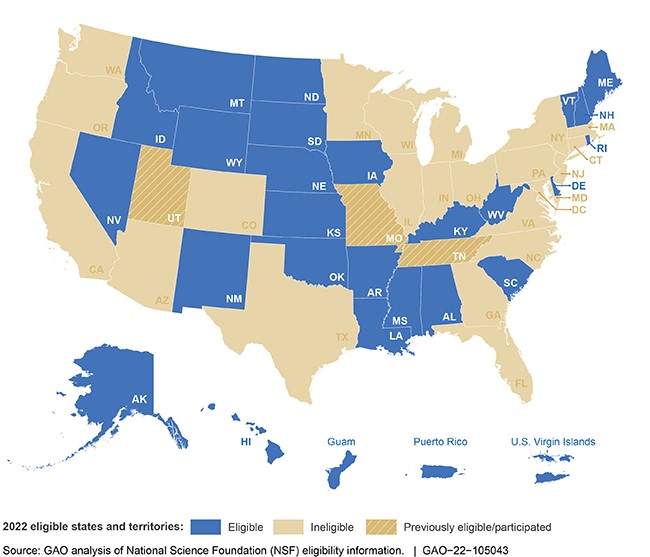
You must complete all six steps for us to consider your application. Essay and letters of recommendation instructions are included below.
Deadline: Application deadline is March 7, 2026.
You’ll input contact, academic, and demographic information directly into the form at the 2026 Summer REU Application. This section of the application is two pages long. You must answer all of the questions with red asterisks next to them to move on to Step 4.
Once you’ve completed the first two pages of the application, you’ll have the opportunity to select the project you’d most like to work on. You must select at least one project, and you can select up to three choices:
Carbon Quantum Dot Sensor Fabrication and Testing on Urine Samples, Mentors: Dr. Shengnian Wang and Dr. Teresa Murray
Importance of Macroeconomic Aggregates, Mentor: Dr. Ghislain “Nono” Gueye
Importance of Macroeconomic Aggregates, Mentor: Dr. Ghislain “Nono” Gueye
Data analysis and math models, Mentor: Dr. Xiyuan Liu
Water Quality Monitoring and Identification of Potential Pollution Sources, Mentors: Dr. Wesley Zech.
Data analysis and math models, Mentor: Dr. Xiyuan Liu
Water Quality Monitoring and Identification of Potential Pollution Sources, Mentors: Dr. Wesley Zech.
Heavy metal exposure and reproductive health, Mentors: Dr. Ricky Leung and Dr. Shuk-Mei Ho
You’ll upload an essay that describes your career goals, training, and why you want to participate in a summer research experience for undergraduates (REU).
Size limit and format. Write FUTURE Sensors REU 2026 and your first and last name at the top of the page. The maximum length is one page using 11-point Calibri, Arial, or Times New Roman font with 1 inch or more for all margins. Save your document as a PDF. (You can select print as a PDF and save the file if you do not have a PDF program.) Your file name must begin with FUTURES Essay followed by your first and last name.
Tell us about your career goals, your training (jobs, school, etc.), and why you want to participate in a summer research experience for undergraduates (EU). Describe what you can gain from this REU. Include your career goals and what you hope to accomplish throughout your career. If graduate or professional school is part of your plan, mention this.
You should also tell us about college courses, internships, jobs, and/or any other relevant training that has sparked your interest in one or more of the REU projects. You can also explain how these training experiences have prepared you for this REU and/or for your career. Also, write about one or more of your strengths (grades or rank, projects completed, inventions, presentations made, etc.).
Upload your essay as a PDF. Use the link below. You will be directed to sign into Google. If you cannot sign in or otherwise upload a file then send your PDF to Dr. Teresa Murray at tmurray@latech.edu. You must have this subject line: FUTURE REU Essay and your first and last name.
Find two faculty members to write a letter of recommendation for you (two pages maximum). You have the option to have one faculty member and one work supervisor write letters. The subject line must read FUTURE Sensors LoR followed by your first and last name. Have them save their Word file or PDF with a file name that begins with your last name, then your first name, followed by 2026 FUTURE REU. They must submit their letter to Dr. Teresa Murray at tmurray@latech.edu. Dr. Murray must receive both letters by March 21, 2026. We suggest that you give your writers at least three weeks’ notice before the deadline.
If selected for the summer program, the REU program will provide on-campus housing, a food plan for students that are housed on campus, and travel. Travel includes domestic transportation to the project’s campus, to the Annual Meeting in Birmingham, AL, and from the Annual Meeting to the student’s home. In addition to travel, dorm housing and housing-related food plan, REU students will also receive $5,000 for full 8-week participation. REU students will also participate in our annual summer conference at the University of Alabama Birmingham in Birmingham, AL (July 30-31, 2026) and will present their project’s results with fellow summer REU students. (The REU program will pay for travel to the Annual meeting at UAB or reimburse students for travel).
If the button to the far left doesn't work, contact Dr. Murray at tmurray@latech.edu.