


Louisiana Tech University is contributing to a cutting-edge technology that could transform how scientists understand and treat brain disorders such as depression, Parkinson’s disease, and addiction.
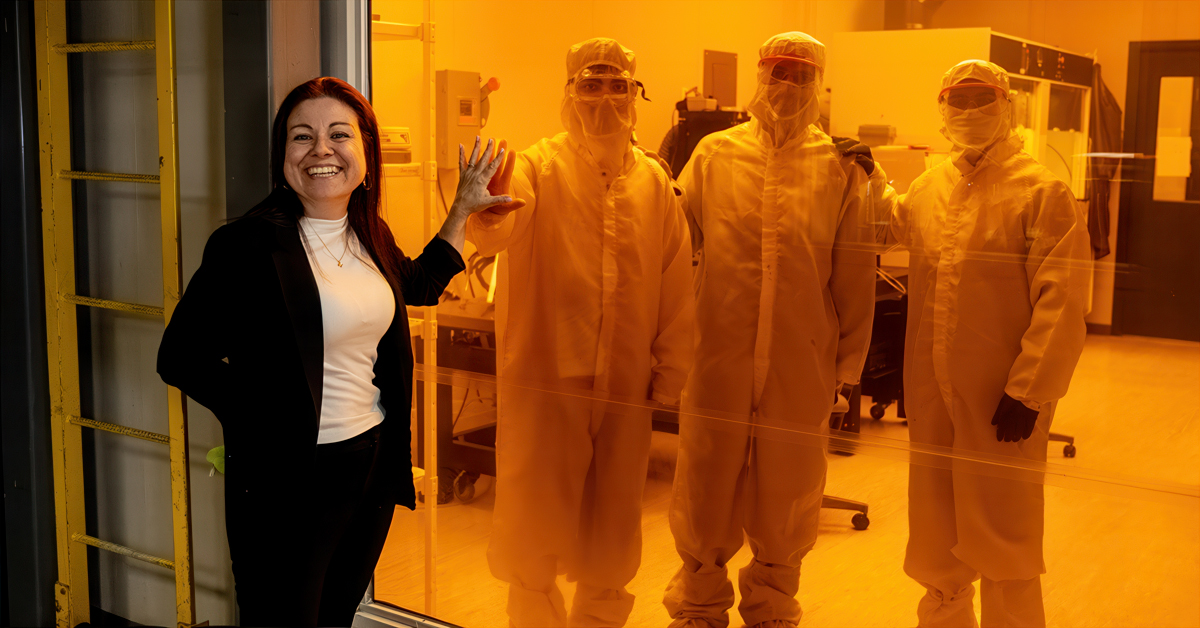
Dr. Elisa Castagnola, assistant professor of Biomedical Engineering, and her team in the College of Engineering and Science are part of an international research team that includes collaborators from Tulane University, LSU Health Shreveport, and the University of Genoa (Italy), whose findings were recently published in Advanced Functional Materials (AFM). Firmly established as a top-tier materials science journal, AFM publishes breakthrough research across nanotechnology, chemistry, physics, and biology, and is widely recognized for its rigorous peer review, high-quality content, and strong impact within the global materials science community.
The team developed a novel nanomaterial-based coating that significantly enhances the performance of implantable flexible neural sensors. These advanced sensors can simultaneously detect key brain chemicals like dopamine and serotonin while also recording electrical activity. This dual capability provides researchers with a more dynamic picture of how the brain functions in real time.
The brain communicates through both electrical signals and chemical messengers, but most existing technologies can only measure one at a time. This innovation bridges that gap. The technology enables:
- Simultaneous detection of multiple neurotransmitters at extremely low levels
- Improved signal clarity, allowing more accurate and reliable data
- Stable, long-term monitoring in biological environment
These advances could lead to a better understanding of brain function and dysfunction
and more personalized treatments, as well as improved therapies for neurological and
mental health conditions.
“This type of technology allows us to observe the brain in a much more integrated way,” said Castagnola. “By capturing both chemical and electrical signals at once, including multiple neurotransmitters simultaneously, we can begin to better understand the complex mechanisms behind neurological disorders and how treatments affect them in real time.”
Castagnola’s role in this research highlights the strength of COES in biomedical engineering and utilizes MXenes, an emerging class of nanomaterials synthetized by Dr. Naguib at Tulane University, combined with conductive polymers to dramatically improve sensor sensitivity, durability, and performance.
“Advanced Functional Materials is an internationally recognized journal with rigorous submission requirements. It is a testament to the world-class quality and importance of Dr. Castagnola and her collaborators’ work that it has been published in such a prestigious journal,” said Dr. Arden Moore, associate dean for research in COES. “This work also has clear potential to improve the health and quality of life for humanity overall such that its impact goes far beyond scientific discovery alone.”
As this technology continues to evolve, it holds strong potential for future clinical applications, including advanced brain-machine interfaces and more effective, personalized treatments for neurological disorders.