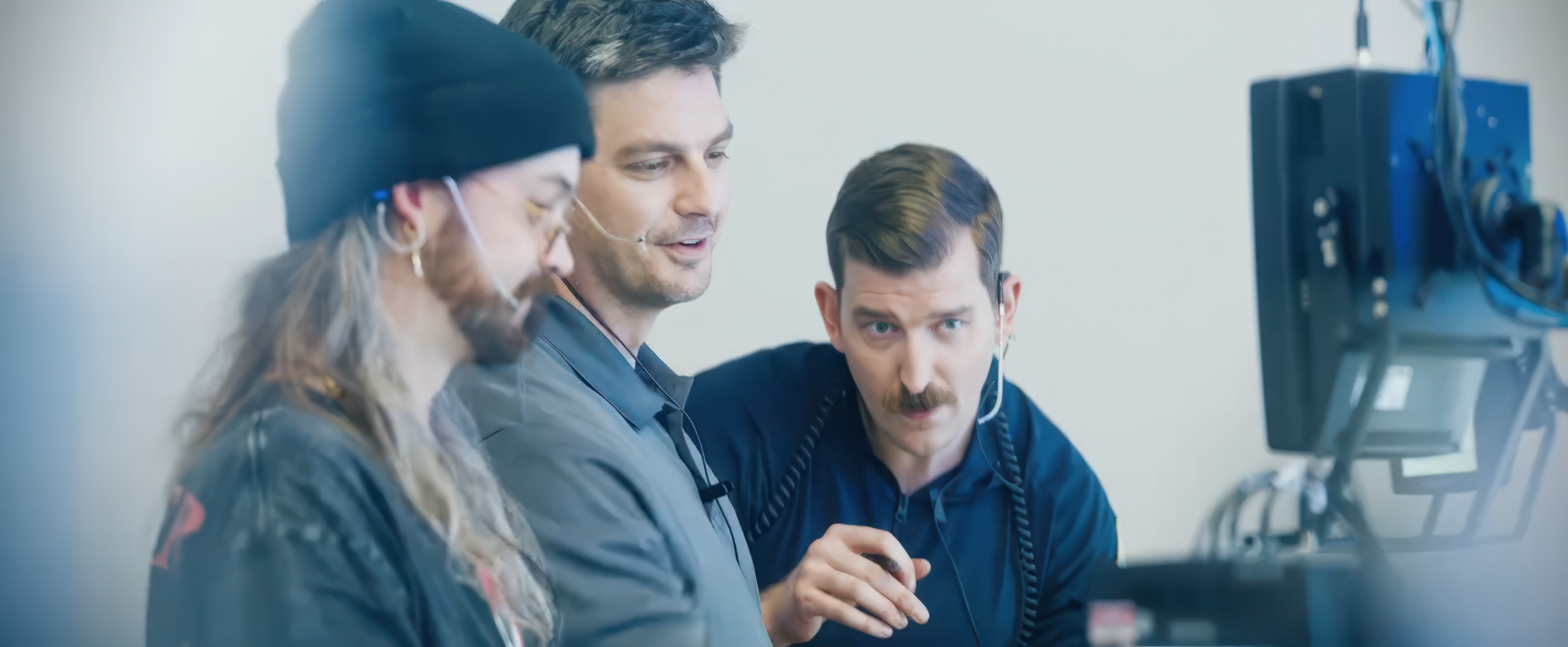
Jeb Stefan, a two-time Mechanical Engineering graduate of Louisiana Tech University (B.S. '12, M.S. '15) and former Bulldog Baseball pitcher, is part of NASA's Artemis II mission, providing engineering support for the flight control team and helping create critical capabilities for the Orion spacecraft.
With the world's eyes on the skies, Stefan took time to answer questions about his time at Louisiana Tech, his experience working on the Artemis II mission, and what advice he has for aspiring space explorers.
What experiences at Louisiana Tech had the biggest impact on your path to working on Artemis II?
- "During my time as an undergraduate student at Louisiana Tech, I had the opportunity to intern at NASA Kennedy Space Center working with Dr. Henry Cardenas. That opportunity allowed me to gain valuable experience while also exposing me to NASA and the aerospace industry. As a student, the opportunity to work alongside researchers and engineers at a NASA center had a huge impact by showing me what was possible."
Was there a specific moment when you realized you wanted to work in space or on missions like this?
- "Working in space exploration has been something that I have wanted to take part in since I was a child. Growing up when the Shuttle was being used to assemble the International Space Station was an inspiration to me."
Can you describe your role on the Artemis II mission and what a typical day looks like?
- "I am a member of the Orion spacecraft RPOD (Rendezvous, Proximity Operations, and Docking) GN&C (Guidance, Navigation, and Control) team. We are responsible for developing the capabilities necessary to rendezvous and dock the Orion spacecraft with other vehicles. For Artemis-II, the team developed the Proximity Operations Flight Test (Prox Ops demonstration) where Orion approached the upper stage of the rocket and tested the performance of the spacecraft while the Crew was performing precision manual piloting tests. Additionally, our team was responsible for several tests of our camera sensor system. During the mission, I supported the MER (Mission Evaluation Room) console for these activities. The MER is the Orion engineering backroom which supports the flight operations."
What has been the most challenging or rewarding aspect of working on this mission?
- "The most rewarding aspect has been seeing the Prox Ops demonstration performed on the first day of the mission. It was great to see something our team has simulated so many times be performed on-orbit."
What advice would you give current COES students who are interested in aerospace or working at NASA?
- "If space exploration is something they are passionate about, then they should go for it. There are so many opportunities available to engineering and science graduates given how busy the industry is currently."
Are there particular skills, internships, or experiences you would recommend they prioritize?
- "I believe that having a diverse background is very beneficial. The industry requires virtually every aspect of engineering and science, so there are opportunities for what appeals to each student, and they should go for it."
What excites you most about the future of the Artemis program and human space exploration?
- "Since I work Orion RPOD GN&C, I am most excited about the upcoming docking missions with the HLS spacecrafts (Human Lander Systems) during Artemis-III and -IV."
What areas of study or emerging fields should College of Engineering and Science students be paying the most attention to as the space industry evolves?
- "Since the aerospace industry involves such a diverse set of disciplines, there is no one answer to this question. As technology and computing become continuously more prevalent in everything we do, those skills become a larger part of everything we do."